
Following a Burlington County Street Address
A street-by-street search begins with a physical address, not a person name. New Jersey's address and municipality tools, NJGIN address points, and a municipal assessor can identify the legal municipality, block, lot, lot qualifier, or PIN. That parcel key opens the county's property-document trail. The recorded owner, mailing address, permit applicant, voter record, and historic directory occupant are separate labels. They should never be treated as interchangeable proof of who is currently at the address.
Burlington County has 40 municipalities, so the local custodian changes with the property. The county's property-viewer applications were listed as offline during research. That makes NJGIN's statewide address, county, municipality, block, and lot path especially important. The municipal assessor remains the route for parcel-card detail. From there, PRESS can supply recorded documents and BCLS can supply dated address directories when the question moves into the past.
- Verify the street's USPS form and legal municipality, then resolve the parcel key through NJGIN or the municipal assessor.
- Search PRESS by municipality, block, lot, and date for post-March 2012 property documents.
- Use the recorded owner or legal description to search the older name-based PRESS period when needed.
- Check municipal permits or code records for an address-linked chronology, not a household list.
- Use voter material and criss-cross directories as separate, dated clues, then compare them to the parcel and deed trail.
Normalize a Burlington County Street Directory Address
Postal geography can hide the legal municipality that controls a record. The New Jersey Municipality Lookup accepts street address, city, state, and an optional ZIP code, then returns a municipality and standardized address format. NJGIN's address layer is built from parcel records and local GIS contributions, with links to road-centerline segments and alternate street names. These tools help prevent a street search from following the wrong town or a misread postal label.
Do not equate a ZIP or mailing city with a municipal boundary. Burlington City and Burlington Township share 08016. The 08060 postal area reaches Eastampton, Mount Holly, and Westampton, while 08075 serves Delanco, Delran, and Riverside. Marlton is a postal name for Evesham Township. A county address can even use an outside postal identity, as illustrated by assessor-contact addresses for Washington Township, Bass River, and Chesterfield. Verify a delivery point with USPS, then use the municipality and parcel key for county records.
- Situs address
- The physical parcel location used for assessment and mapping.
- Mailing address
- The place where tax notices or owner correspondence are sent, which does not prove occupancy.
- PIN
- A parcel identification number used with mapping and assessment data.
- Plat
- A recorded map that can show lots, blocks, roads, or subdivision layout.
Mapping a Burlington County Street to Block and Lot
The NJGIN property resource is the documented fallback while the county property's online viewers are offline. It supports searches by address, county, municipality, block, and lot. Parcel geometry, standardized PINs, address points, alternate street names, and road-centerline links can anchor a street on the map. Hosted owner names are redacted under Daniel's Law, so use geometry to identify the parcel, then move to the municipal assessor or County Clerk for the legally appropriate record route.
A municipal parcel card may contain the owner name, situs, mailing address, block, lot, lot qualifier, class, assessment values, exemptions, tax district, legal description, and sketch or characteristics when maintained. These are property facts, not a complete resident roll. The County Board of Taxation certifies tax lists supplied by municipal assessors, but tax collection and parcel-level details remain local. Do not infer delinquency, foreclosure, or household membership from a value or a missing deed result.
Burlington County PRESS Searches by Street Keys
The Burlington County PRESS portal supplies the deed and recorded-document part of a street directory search. In the post-March 1, 2012 period, block-and-lot searching ties a known parcel to recorded instruments. The document-type mode combines municipality, document type, and date range. Name mode uses last or company name with an optional first name, document type, and date range. It supports a percent-sign wildcard, which can help with spelling, initials, or trust and business variants.
Use a result for what it actually records: grantor or grantee, document type, recording date, instrument number, book and page, block and lot, legal description, and image availability. A deed records a transfer of an interest. It does not state who occupies the property. Maps recorded before 1995 are not on PRESS. When a street-level question reaches a map or pre-1965 document, use the counter, the archive viewer, or the State Archives rather than assuming the modern portal is complete.
| PRESS field | Street-directory use | Important note |
|---|---|---|
| Municipality | Sets the locality for document type and block-and-lot search | Use the legal municipality, not only a postal city |
| Block, lot, qualifier | Connects an address to post-March 2012 property records | Requires municipality and can be date-limited |
| Last or company name | Follows a recorded party into owner-name periods | First name is optional; % may widen a name |
| Document type and dates | Narrows deeds, liens, or other instruments | Use mm/dd/yyyy dates |
| Instrument, book, page | Retrieves a known citation | Useful after a prior record is identified |
Burlington County Street Records by Address
No one source identifies every connection along a street. The parcel map supplies shape, location, and key. The assessor supplies property assessment detail. PRESS supplies recorded parties and documents. Municipal permit and code offices can supply a work or inspection chronology. State voter records can be a separate registration clue, subject to exact-name matching and redactions. A historical criss-cross directory can attach a dated occupant or business name to an address. Each source has a different coverage period and access channel.
| Address record | What it can show | Burlington County access route |
|---|---|---|
| NJGIN parcel and address layer | Geometry, address linkage, municipality, block, lot, and PIN | Public statewide resource; hosted owner names redacted |
| Municipal assessor card | Situs, owner or mailing fields, tax district, assessment detail | Contact the municipality's assessor |
| PRESS or archive viewer | Recorded parties, deeds, liens, plats, dates, legal descriptions | Portal mode depends on the record period |
| Permit or code file | Work, inspection, notice, and follow-up chronology | Municipal construction or code custodian |
| Criss-cross directory | Dated address-to-name clues | BCLS, Library of Congress inventory, or local repositories |
Municipal Work Records Along Burlington County Streets
For a City of Burlington address, the Construction Office handles work tied to new buildings, additions, structural alterations, interior floor-plan changes, changes in use or occupancy, parking-layout changes, and building, electrical, HVAC, or plumbing work. The office describes application review, potential zoning or site-plan approval, inspections during major phases, and approved plans kept at the site. Other municipalities have their own clerk, construction official, or code custodian.
The City of Burlington Code Enforcement page points to a separate address-based chronology for complaint, inspection, notice, and follow-up material. The person making a complaint is confidential on the official complaint form. Permit and code records are therefore useful for dating work at a property, not for producing a resident list or identifying private household members.
The Construction Office source documents the address-linked work-record channel.
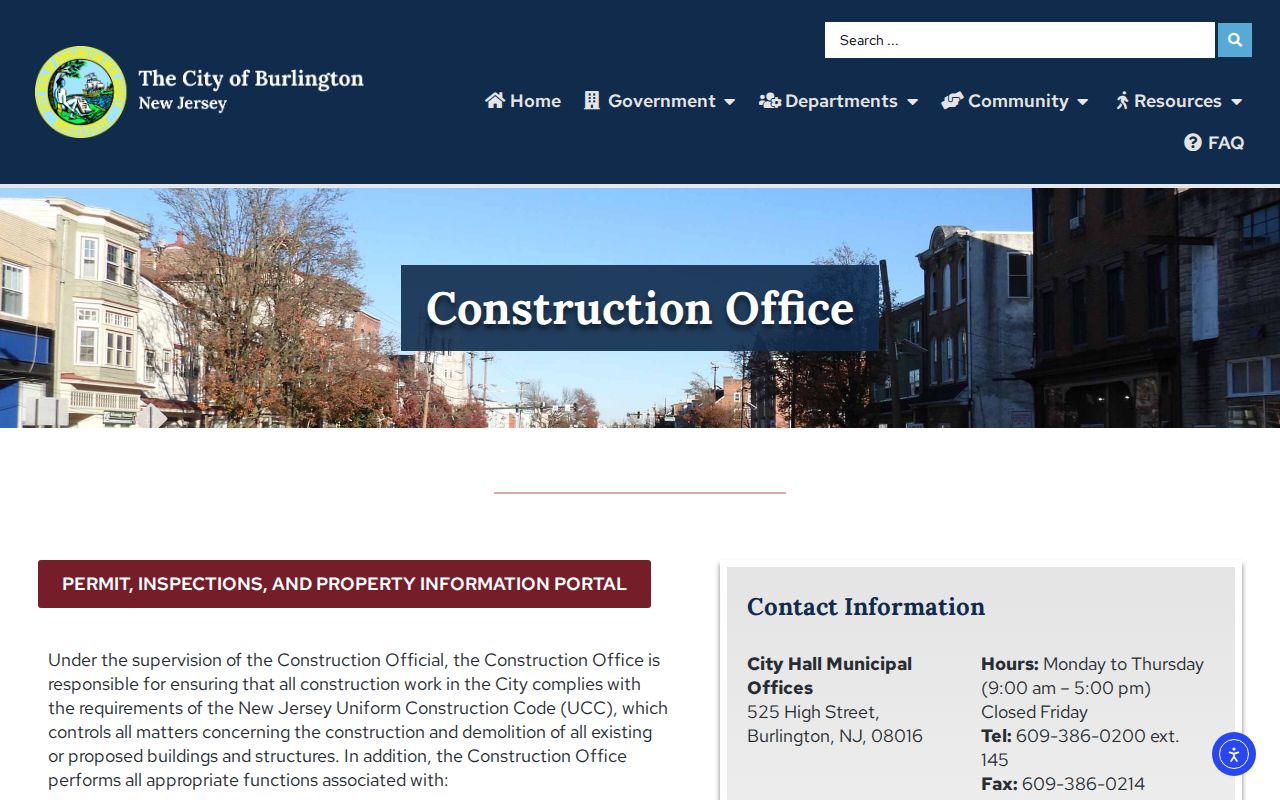
Use the property address, record type, and date when asking a municipal office for an existing file.
The Code Enforcement source describes the related inspection and notice route.
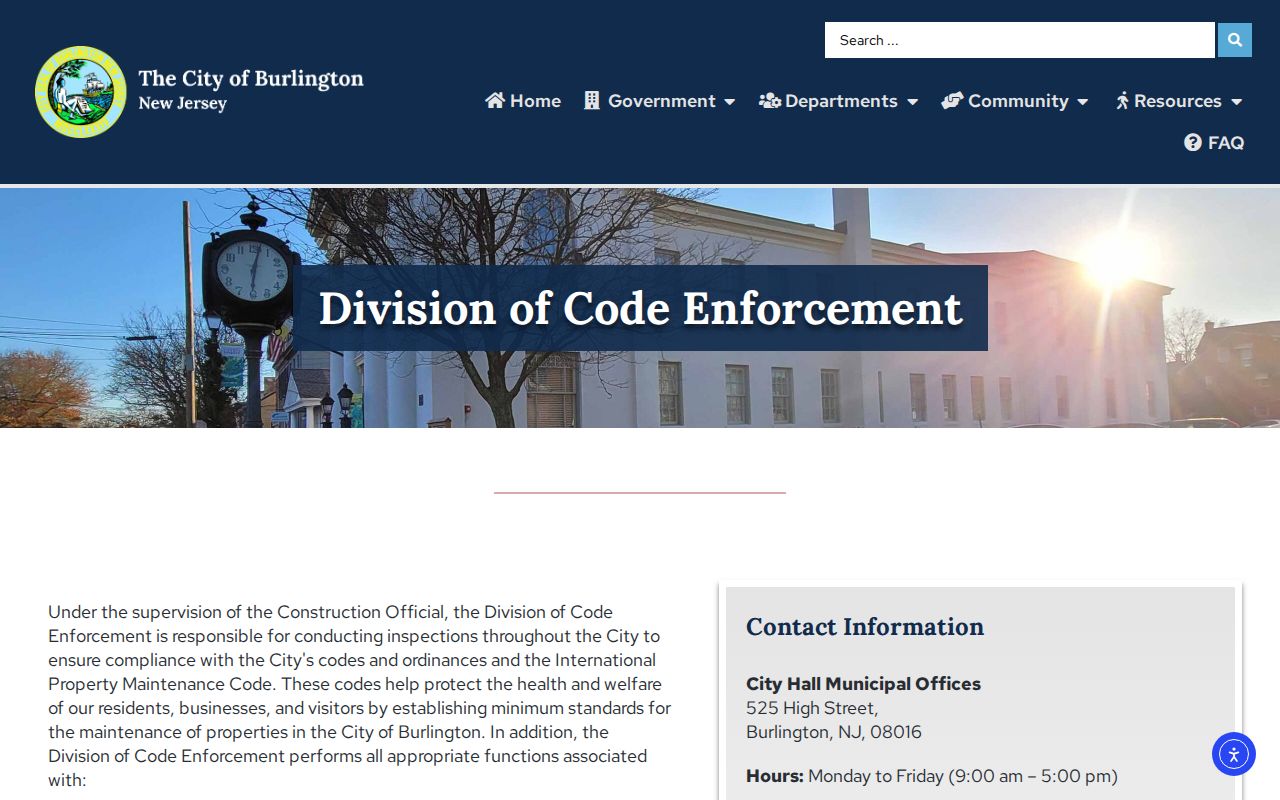
Address evidence gains value when it is kept separate from private complaint-source information.
Burlington County Street Directory Has Two Cutoffs
The time split inside PRESS is a central Burlington County street-directory detail. Block-and-lot search begins with documents recorded March 1, 2012. The 1965 through February 2012 period requires owner-name search. Before 1965, the county archive viewer is the documented owner-name path. The State Archives then extends a deeper trail with Burlington deeds from 1785 through 1901, grantor indexes from 1785 through 1921 and 1948, and 198 microfilm reels.
This is a useful records-history check, not a defect in an address. For pre-1965 material, use the County archive viewer, then consult State Archives microfilm or FamilySearch digitized deed books for the earlier period. The County Clerk can explain a PRESS reference at 609-265-5122. Preserve the exact party spelling, year, instrument or page, and legal description before following an older chain.
Burlington County Voter Clues Along a Street
New Jersey voter material can be one address-linked clue, but it is not a public enumeration of every household on a street. Ordinary public fields may include name, residence address, mailing address if maintained, party affiliation, ward or district, and status, subject to redactions. The state voter portal requires an exact county-record name for a self-check. A no-match can reflect a changed surname, initials, nickname, spacing, or inactive status rather than an absence from the county.
The Burlington County Board of Elections, at 301 Harper Drive in Moorestown, maintains election and district material. For an existing record, list, or map not shown online, use the local custodian or a written OPRA request. Signatures, Social Security numbers, driver-license identifiers, and protected addresses are withheld. Ballot choices are secret. Any street-by-street comparison should therefore label the source and date, not promise a complete or current household list.
Historic Burlington County Streets Use Criss-Cross Volumes
The Library of Congress catalogs Burlington County criss-cross directories from 1971 through 1995, with documented gaps in 1975, 1984, 1993, and 1996. Those volumes reverse the usual name-directory approach by starting with an address. They are useful for tracing a dated household or business along a street, but their coverage is not a current roster and a missing year can break a sequence. The Library of Congress asks researchers to specify the directory type, location, state, and exact years, and does not search names on request.
BCLS's New Jersey Room and the Burlington County Historical Society are practical local places to continue. BCLS confirms directories, maps, newspapers, family files, cemetery records, photographs, and scrapbooks. The Historical Society holds deeds, maps, manuscripts, family material, business records, rare books, and photos, with appointment research. The historical volume collection is explained more fully in the Burlington County city directory.
The City of Burlington Municipal Clerk page is also the local starting point for municipal archives and OPRA routing.
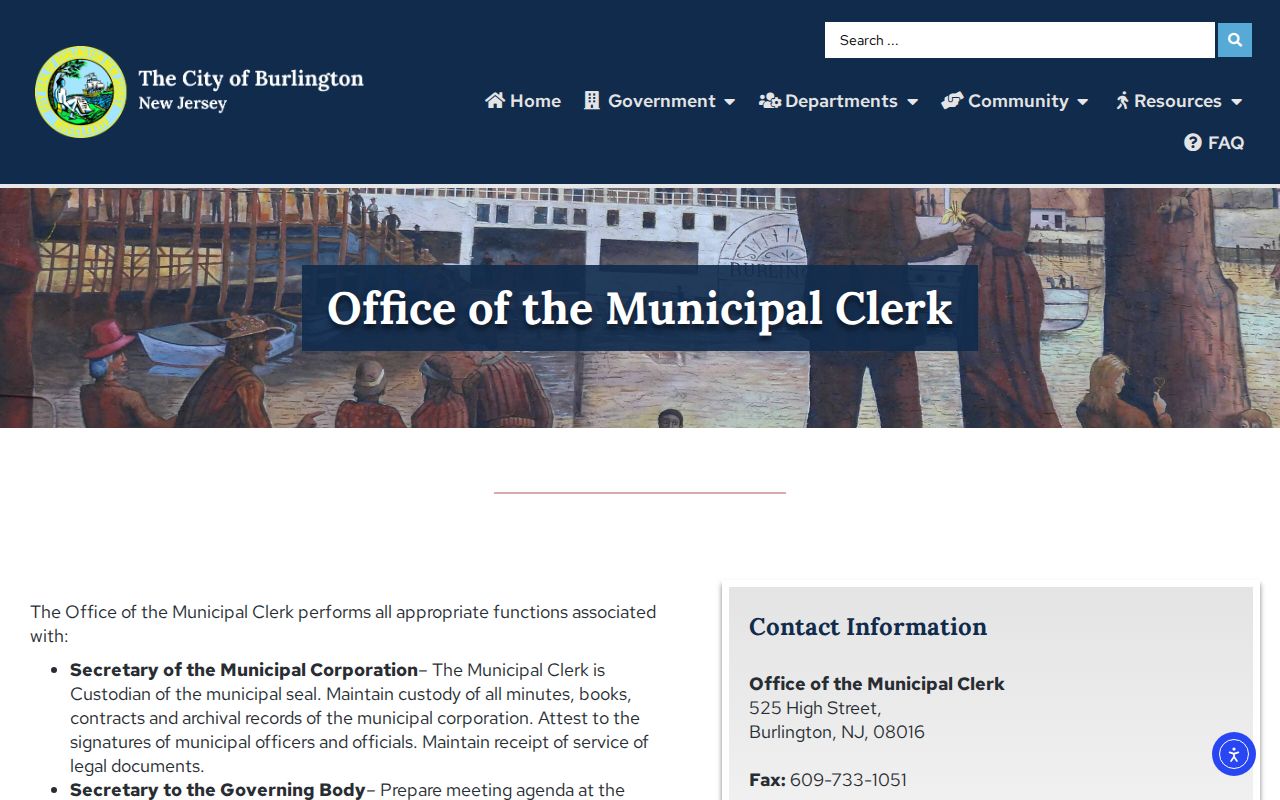
Ask the municipal clerk for the custodian of an existing local map, minute, archive, or record series.
The City of Burlington permits and applications page provides another municipal access point.
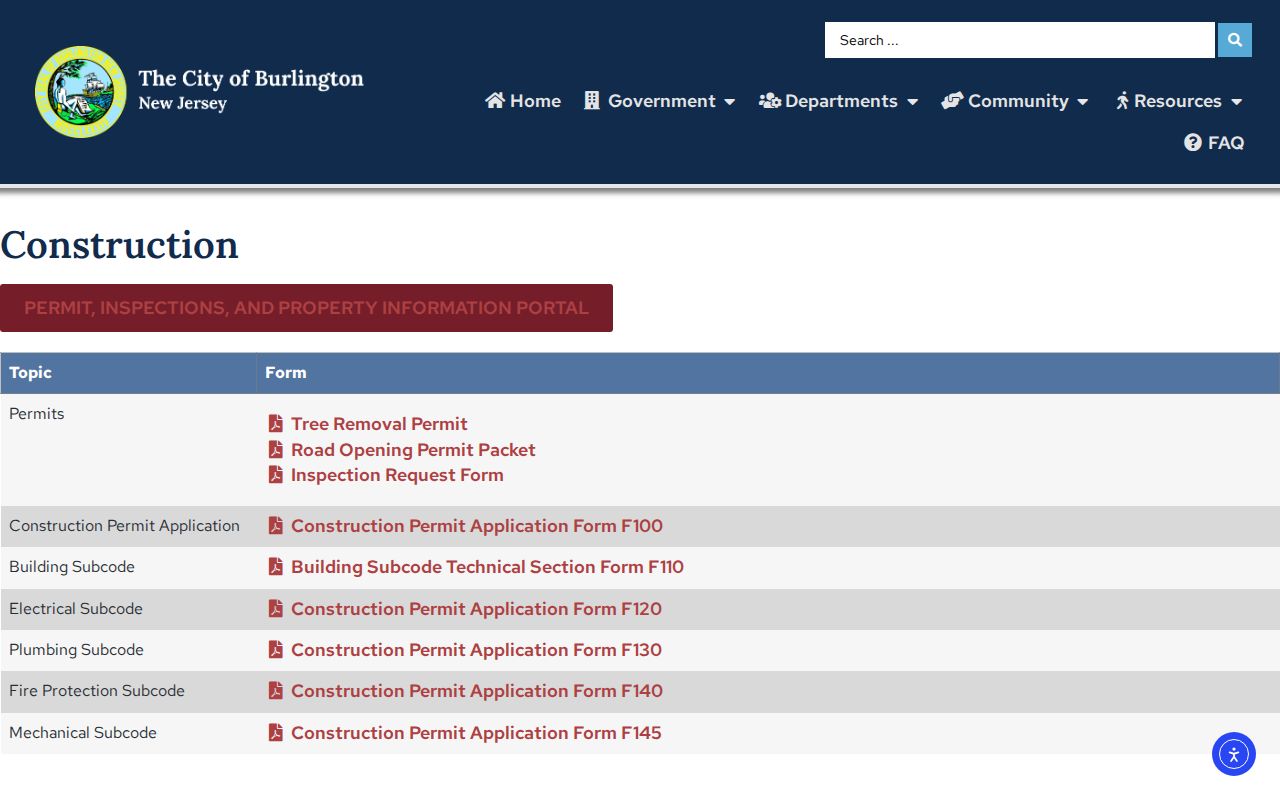
When a street search turns into a request, identify the address, record type, and date range rather than asking for a new compiled list.
Burlington County Street Directory Privacy Limits
A street directory cannot reveal every person connected with an address. Owners, renters, household members, utility customers, delivery customers, protected voters, and people in sealed records are different categories. NJGIN may show parcel geometry while redacting owner names under Daniel's Law. The New Jersey Address Confidentiality Program provides substitute-address protections for eligible participants. Motor-vehicle information, confidential court records, and many vital-record details are not ordinary street-search material.
Use an address record for the limited fact it supports. A permit can date work. A deed can identify recorded parties. A tax mailing address can identify where a notice was sent. A directory entry can show a past listing. None replaces a properly dated, verified account of current residence. Where an online record ends, contact the correct custodian, library, archive, or municipal office instead of filling the gap with a guess.