
Burlington County Records for One Person
Match the record to the question first. A property roll shows a recorded owner. It may show a mailing address, but not everyone at a location. A court index lists a public case and its status, and nothing more. Estate papers from the Surrogate can yield a decedent, a town, or a docket lead. A city directory or newspaper story adds historical context around a name. Attach the source type and source date to every fact you keep. That discipline keeps this Burlington County resident lookup method sound. It holds up when two records disagree.
| Record | What it can confirm | Where to start | Access and limit |
|---|---|---|---|
| Recorded property document | Party name, instrument, recording date, and legal-description clue | County Clerk PRESS and the pre-1965 archive route | Search mode changes by year; recorded party is not a household list. |
| Parcel or tax record | Parcel, situs, mailing address, and assessment fields | Municipal assessor or NJGIN | NJGIN hosted owner names are redacted under Daniel's Law. |
| Voter registration | Exact registered-name spelling, status, and election geography when public | NJ Voter Search or County Board | Exact-name matching and protected-address rules apply. |
| Court case | Public docket, party role, dates, and disposition when available | NJ Courts Find a Case | Confidential, sealed, juvenile, adoption, and expunged material are excluded. |
| Estate index | Decedent, city, death date, and docket lead | Burlington County Surrogate | Index is incomplete and may lag 24 hours or more. |
| Vital record | Event and relationship evidence | Event registrar, NJ Department of Health, or Archives | Current copies have eligibility and identity requirements. |
| Business or license record | Dated entity or professional affiliation | NJ DORES, UCC, or MyLicense | Filing and service addresses are not residence proof. |
| Historical directory | Past address, household wording, and business clue | BCLS, State Library, or Historical Society | Publisher coverage and missing years limit conclusions. |
An official portal is the natural first stop, yet the human channels still matter. The municipal assessor holds the parcel-card detail behind a property roll. The County Clerk can decode an instrument reference on a deed. The court clerk knows the file-copy route. The Surrogate schedules estate record searches. The local registrar or state office covers vital records. For historical material, BCLS and the Historical Society both help. Treat these as complementary custodians rather than duplicate databases. Each one answers a different slice of the question.
Burlington County Lookup Name Trap
Forty municipalities sit inside Burlington County. That scale turns a common surname into a real hazard. The hazard bites anyone merging results from the County Clerk, the courts, the voter rolls, the Surrogate, or an old directory. Build a small identity matrix before combining anything. Compare the fields that pin a record to its time and place. Matching initials is not proof. A historical directory may print only initials. A deed may name a trust or a business instead of a person. The voter system may also demand the county's exact spelling before it returns anything.
| Name form | Full name, middle initial, suffix, prior surname, spacing, and hyphen variants. |
|---|---|
| Related people | Spouse, co-party, executor, or other family name found in the same dated record. |
| Place | Legal municipality, parcel location, historic postal label, or court county selection. |
| Time | Recording date, case filing date, directory year, event date, or death date. |
| Record key | Instrument, book and page, docket number, block and lot, or estate docket. |
Keep evidence in a dated list instead of forcing a match. A mailing address on a parcel record can differ from the physical street location. A business filing may carry an agent's name. It can also list a service address rather than the owner's. A historical directory can simply be incomplete. Each detail still has value, and each one just needs a second custodian before it supports a firm identity conclusion.
Note: Compare municipality, date, and initials. Also check a record number before treating two Burlington County name hits as the same person.
Burlington County Court Record Checks
Court searches begin at the New Jersey Courts Find a Case hub. That hub is the public entry point for Burlington County Superior Court. It also opens the statewide court layers beyond it. From there, links branch out to civil and foreclosure, criminal, criminal judgment, judgment lien, tax court, municipal, Supreme Court, and opinion routes. Civil and foreclosure access runs through a case-search category with party-name and docket-number tabs. Users then filter by county, docket type, docket number, and docket year. The Search button does its work from there. First-time public users must register for that category. Confidential records stay out of the results.
When a public result appears, capture the details that separate it from another person with the same name, not just the case caption:
- case or docket number and the selected county;
- docket type and party names or roles;
- filing date and public case status or disposition;
- judgment, lien, or public-document links where displayed; and
- visible redactions or a notice that a file is not public.
A filing is a procedural event, not a verdict about anyone. Read the public status and the disposition before drawing meaning from a docket entry. Municipal matters run through NJMCDirect. It wants a ticket or complaint number rather than a countywide name browse. For a closed Superior Court file, the Judiciary documents a CN 10200 request filed through JEDS with processing location SCCO. The request can also go by mail to the Superior Court Clerk's Office. Plain copies cost $0.05 per letter page and $0.07 per legal page. Certified, sealed, and other special copies carry their own listed fees.
Verifying a Burlington County Resident
Verifying that a record belongs to one person calls for a two-custodian check. The sequence exists to limit false matches. It begins with the strongest location key available, adds an independent public record from a second office, and leaves any disputed or restricted detail to the custodian who created it. A partial address proves little on its own. Neither does a business reference. A careful resident lookup never turns either one into a claim of current residence, because the offices holding the parcel, deed, or voter rolls are the only places that can settle the question.
- Define the question: recorded property party, public court case, estate matter, historical resident, business affiliation, or event record.
- Search the strongest key first. For a property, obtain municipality, block, and lot through NJGIN or the municipal assessor. For a name, retain exact and variant spellings.
- Record the source date, address type, related person, and identifying number rather than copying a name alone.
- Confirm with a second custodian, such as a PRESS party entry plus an assessor parcel, or a Surrogate date plus an obituary citation.
- Read case status, record limits, and the date before deciding what the result can prove. Contact the originating custodian if records conflict.
- Docket
- A court or estate file number used to identify one proceeding and distinguish it from a similar name.
- Index versus image
- An index points to a record. An image or underlying file may add context, be restricted, or require a separate request.
- Certified copy
- An official copy issued by the custodian for an eligible request. It is different from an informational historical certification.
Burlington County Voter Record Exactness
New Jersey runs its own Am I Registered?/Voter Search tool. Type a name the way the county registration record spells it. That is the state's own guidance. A hyphen, an extra space, a middle initial, a nickname, or a changed surname can all force a no-match. A voter checking personal status can also learn the voter ID tied to the account.
The ordinary public record may list a name, residence address, mailing address if kept on file, party affiliation, ward or district, and status, with some fields redacted. Ballot choices never appear. Social Security numbers, driver and non-driver ID numbers, and signatures stay protected. A no-match or inactive status does not disprove residency at an address. Returned mail, a move report, a name variation, or a record filed in another county can all explain it.
When the portal stalls, call the Burlington County Board of Elections at 301 Harper Drive, Moorestown, NJ 08057, 609-265-5557, Monday through Friday, 8 a.m. to 4 p.m. A narrow written request to the right custodian is the documented fallback. N.J.S.A. 19:31-3.2 sets an electronic voter-list route with a uniform reproduction charge capped at $375, while excluding signatures and covered-person home addresses.
Note: Voter details stay record-specific, and protected addresses remain protected even when other voter-list fields are public.
Burlington County Estate Record Clues
The Burlington County Surrogate live index answers decedent, estate, and heir questions. Search fields include Last Name, First Name, Docket No., City, and Death Date. At least one criterion is required. The grid displays ID, name, surname, first name, suffix, docket number, city, and death date. Controls cover filtering, sorting, grouping, search, refresh, and XLSX export.
Treat an index row as a lead, not a verdict. The index itself warns it is not the complete universe of official records. It may lag 24 hours or more. Record searches run by appointment. Business is also handled in person, by phone, email, and regular mail. The Surrogate sits at 50 Rancocas Road, first floor, Mount Holly, 609-265-5005. Ask which parts of a file are releasable. Do not assume executor or next-of-kin material is open.
Estate work also feeds a historical property trail. A decedent's date and city can point to an appointment file. That file can lead to a later recorded deed or an obituary. It never bypasses vital-record eligibility or protected address rules.
Burlington County Vital Record Routes
Custody of a vital record follows the event. The local registrar in the event municipality is the first stop. The county registrar list names that town office. For a statewide path, the New Jersey Department of Health Office of Vital Statistics and Registry handles it. Births under 80 years, marriages under 50 years, and deaths under 40 years count as non-genealogical. All domestic partnerships or civil unions do too. Certified copies demand identity and relationship proof or a court order.
The county registrar list pinpoints the right first custodian. Any event recorded in Burlington County is covered.
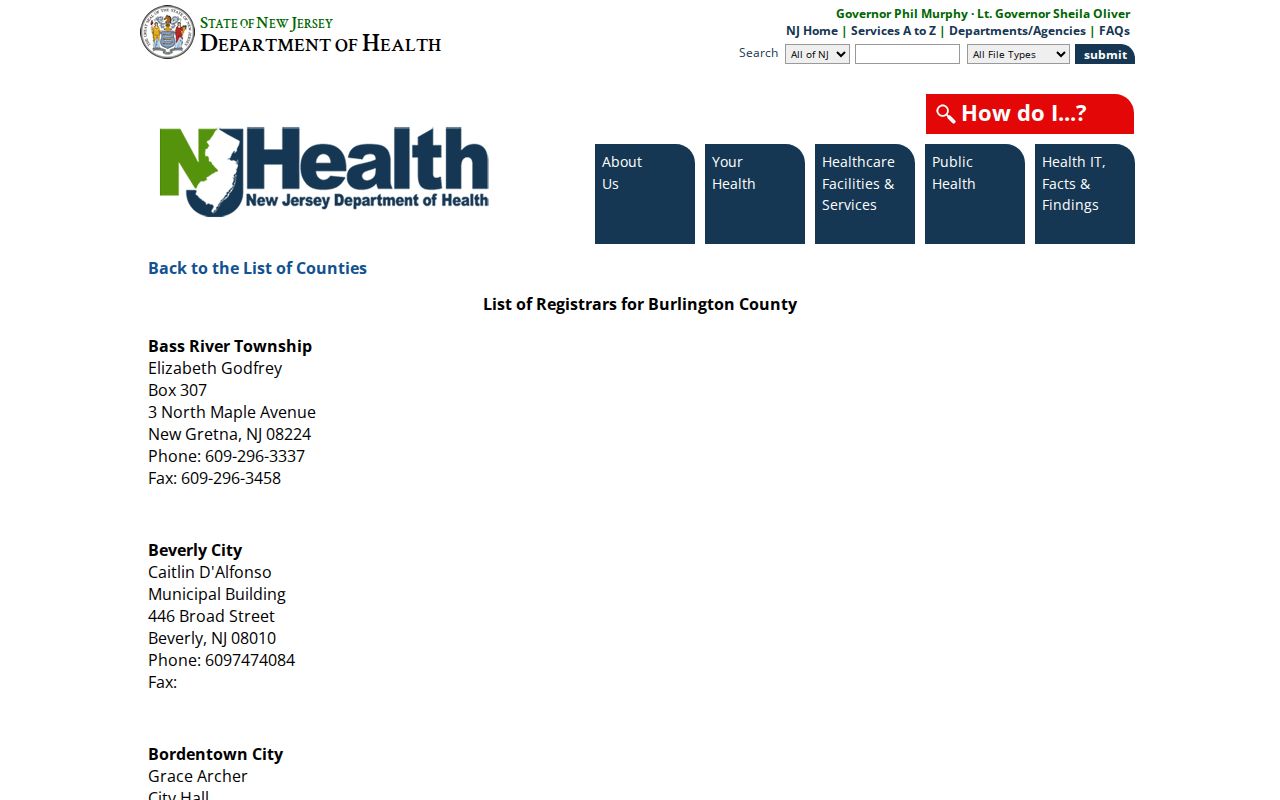
A local registrar is often the fastest route for a municipal event. The statewide office is the fallback when the local search comes up empty.
The NJ DOH non-genealogical records route spells out the application, identification, and payment steps. The state fee is $25 for the initial search. That price covers one certified copy, certification, or No Record Statement. An extra copy of the same record costs $2. Each added genealogy year searched costs $1. Submit through a local registrar, a state walk-in, mail with check or money order, an online partner, or a phone partner. Phone submissions need documents attached. Walk-in non-genealogical service typically runs about two hours. Local fees and timing differ by town.
The Department of Health order information lays out the documentation rules. It also covers the access rules behind a Burlington County resident lookup vital-record request.
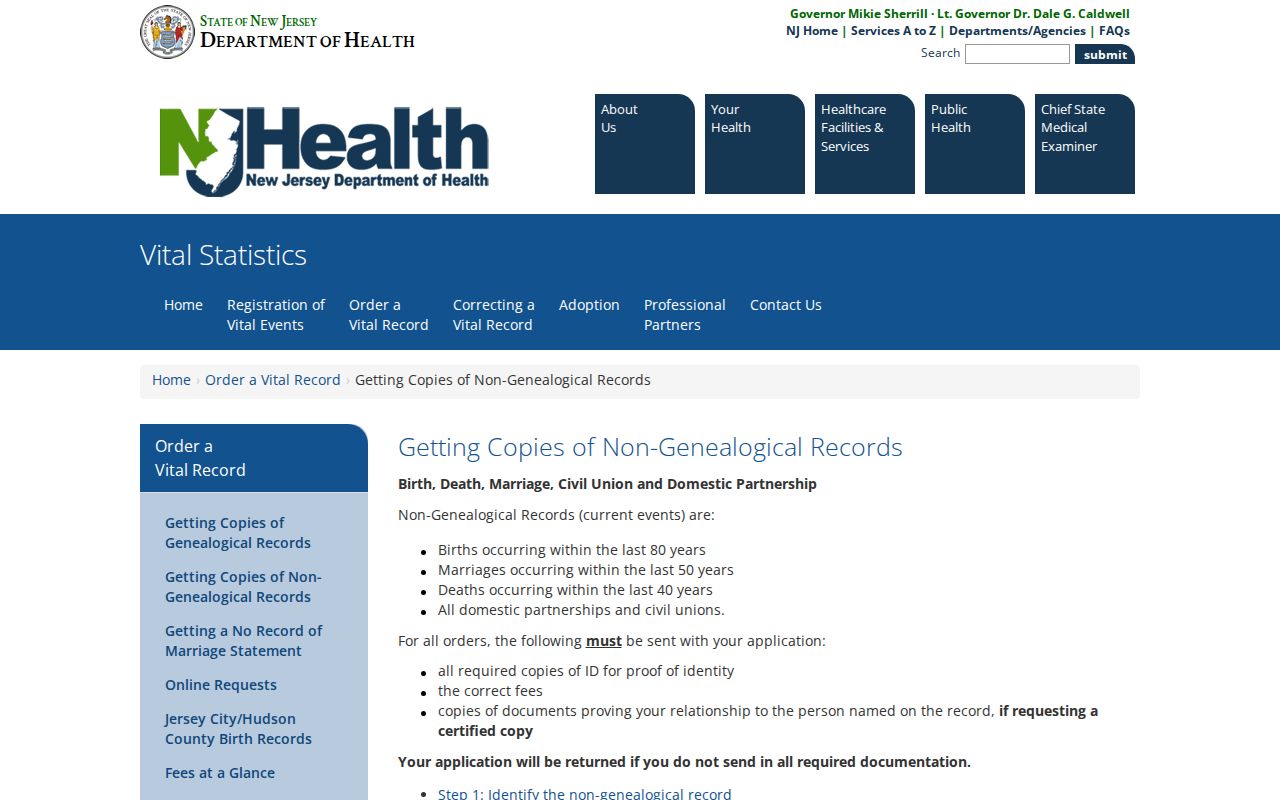
An informational genealogical certification can support historical research. It is not an identity document, and it never replaces the eligibility rules for a certified copy.
Burlington County Affiliation Records
A dated affiliation clue can come from a business or professional record, if labeled carefully. New Jersey's business lookup and DORES services cover business status, standing, filed-document copies, registration certificates, alternate names, trade or service marks, and UCC searches. Spacing and punctuation must match exactly. A result may show the entity name, status, filing history, registered agent, principal or service address, alternate name, and available documents. It does not prove an officer or agent lives at the listed address.
The state business screen is a first step for vetting a named organization before comparing it with a separate Burlington County record.
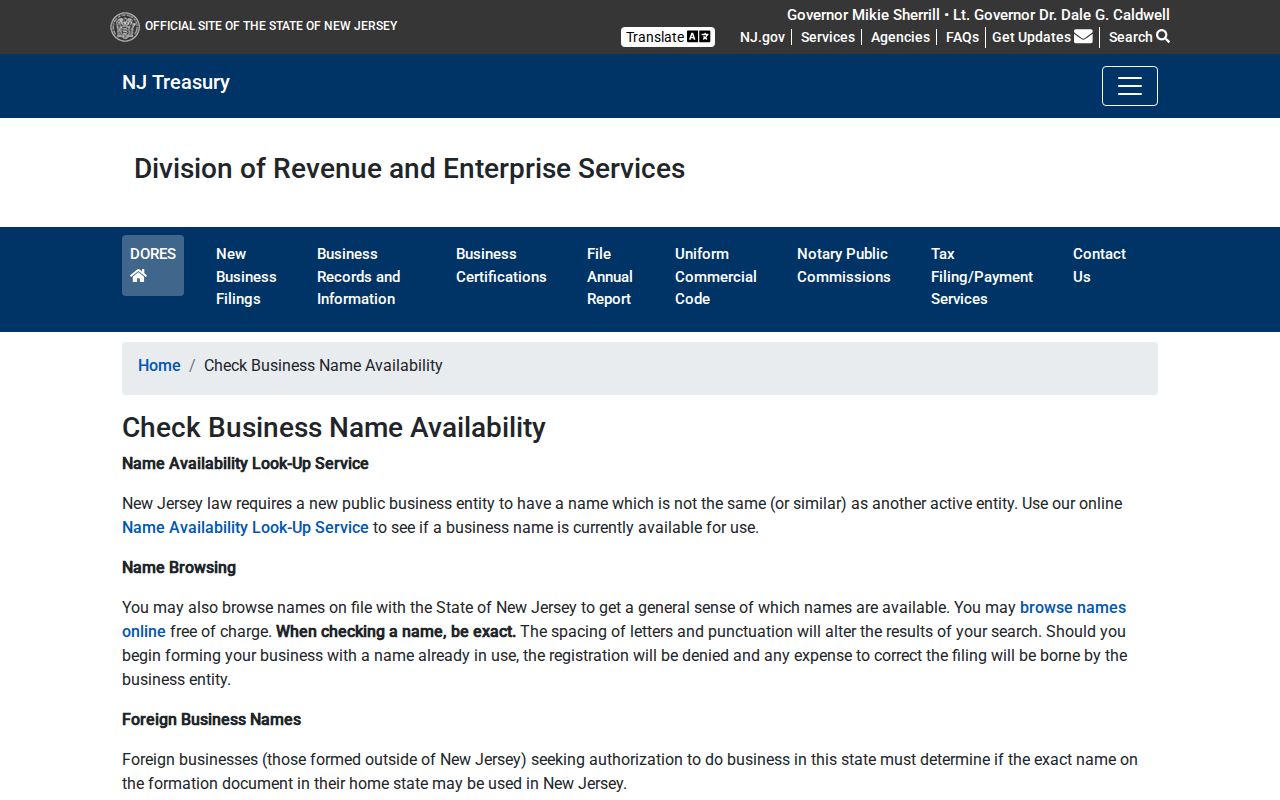
Near-identical names happen. When an affiliation match stays unclear in a Burlington County residents directory result, request the underlying document using the exact legal name and filing number.
New Jersey MyLicense verification is the official umbrella route for a professional-status question. The live service displays its own profession menus and result columns, so field choices are read there. MyLicense is the doorway, and the record type with its available fields shows up on the service itself. Sole-proprietor trade-name filings sit in a separate lane. The Burlington County Clerk is the custodian for those. No county search procedure or copy fee is published.
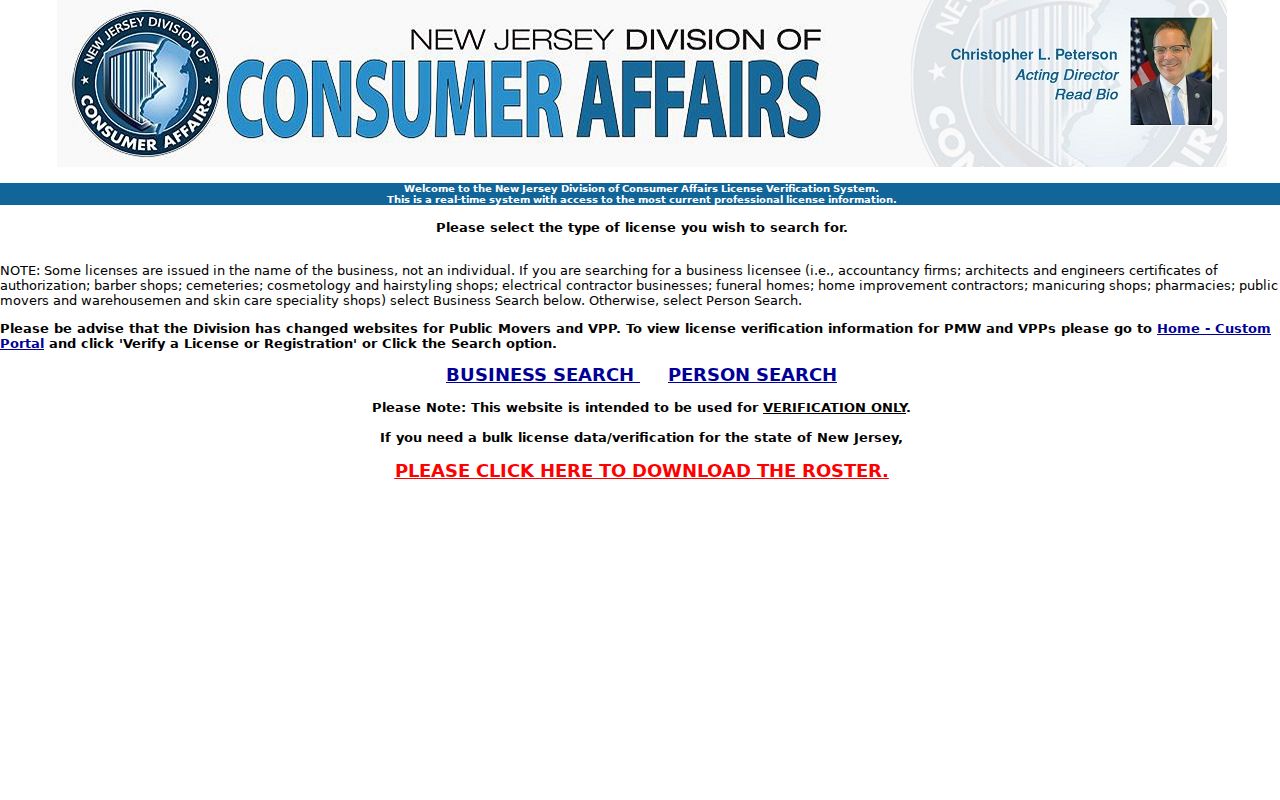
A dated official record should back any person-to-place connection drawn from a professional or business result. Treat a bare listing as a lead.
Note: A service, agent, or filing address is a dated affiliation detail, not proof of a current home address.
Burlington County Record Privacy Stops
Some lookups come up empty by design. New Jersey's Address Confidentiality Program gives eligible participants a legal substitute address with mail forwarding. Daniel's Law shields covered public servants and qualifying household members from disclosure on government sites. The Office of Information Privacy handles Daniel's Law questions. Court Rule 1:38 exclusions, sealed or expunged records, restricted vital records, and motor-vehicle privacy rules draw further boundaries. A Burlington County records office will honor these stops.
Lawful use. Use Burlington County records for a lawful, personal purpose. Do not use a name, address, or record trail to stalk, harass, threaten, or intimidate anyone.
New Jersey's Open Public Records Act, N.J.S.A. 47:1A-1 et seq., lets a person request an existing record from its actual custodian. The law works best with a precise written request. Name the record set, municipality, date span, desired format, and delivery method. For ordinary available records, guidance calls for a written grant, denial, clarification, or extension as soon as possible. Seven business days is the outer limit. Redaction review can still narrow the release.
Burlington County Record Corrections
Two conflicting records deserve a slow look. Preserve both source citations before anything else. Then ask the office that created the disputed entry about its correction process. Routing matters in Burlington County. The municipal assessor corrects parcel cards, the County Clerk answers recording and index questions, and the Board of Elections fixes registration entries. Docket questions go to the court clerk. The Department of Health handles vital corrections, and DORES handles business-filing issues.
Details help the custodian. Keep the URL, record number, date, indexed spelling, and a copy of the result when you write. This habit guards against a common resident lookup error. Public records change, indexes lag, and different custodians record different relationships, so the most convenient match is not always the best-supported one.